


Scope Mounted. Now Let's Zero It And Trust It.
You did the work — the scope is mounted, the rings are torqued, and the reticle is level. But a mounted scope with no zero is like a compass with no reference point. Until that crosshair is dialed to match where your bullet actually lands, none of the setup work means anything downrange. This guide walks you through bore-sighting, zeroing at the range, understanding your turrets, and making sure your mount isn't quietly undermining all of it.
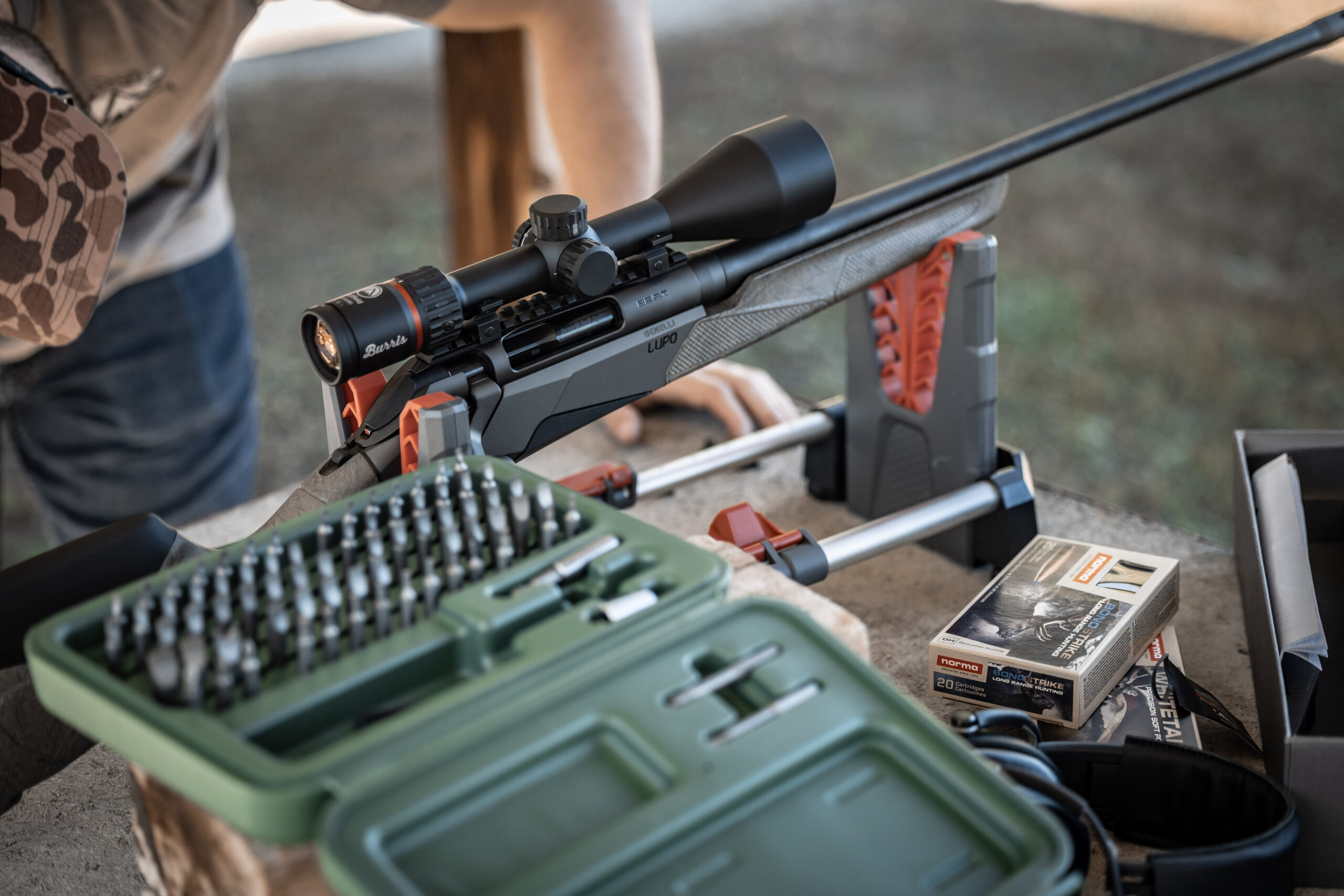
The Range Is Where Your Setup Either Pays Off Or Gets Fixed
Phase 1: Bore-Sighting Before You Fire A Round
Bore-sighting is the step most shooters rush or skip — and then spend twice as long at the range making up for it. The goal is simple: get the scope close enough to aligned before you pull the trigger that your first shots actually hit the paper. Without it, your initial shots may not land anywhere near the target, and you'll burn ammo chasing a starting point instead of fine-tuning a zero.
Think of bore-sighting as coarse adjustment and range zeroing as fine adjustment. Both are necessary. Bore-sighting alone won't give you a reliable zero — but it gets you in the neighborhood so that range work is fast, efficient, and doesn't waste a box of ammunition on shots that aren't even on paper.
01
Before The Range
Bore-Sighting — Get On Paper First
Unload And Secure The Rifle
Confirm the rifle is completely unloaded before you begin. Secure it on a stable rest or in a vise — it needs to be rock-steady and cannot move between looking through the bore and looking through the scope. Any movement between the two views invalidates the alignment.
Look Through The Bore (Bolt-Actions)
On a bolt-action rifle, remove the bolt and look through the barrel from the rear. You'll see a circular view — center your target (a bullseye or distinctive mark at 25 yards) in the middle of that view. Don't move the rifle. If you have a semi-auto or other action that doesn't allow this, use a dedicated laser boresighter or collimator instead.
Adjust The Scope To Match The Bore's View
Without moving the rifle, look through the scope. The reticle will probably be pointing somewhere other than your target. Dial the turrets to move the reticle toward the target — elevation turret to move up or down, windage turret to move left or right — until the crosshairs land on the same point the bore was centered on. This is your coarse alignment.
Or Use A Laser Boresighter
If your action doesn't allow looking through the bore, a laser boresighter is a clean alternative. Insert it per its instructions (muzzle or chamber depending on type) and adjust the scope's reticle to center on the laser dot. Either method gets you to the same place: scope and bore roughly aligned so your first shots are on paper.
Phase 2: Zeroing At The Range
With bore-sighting done, you're ready for the range. The process from here is methodical — start close, confirm you're on paper, step back to your zero distance, shoot groups, and adjust. Patience and discipline at this stage pays off in a zero you can trust for the life of the rifle and scope combination.
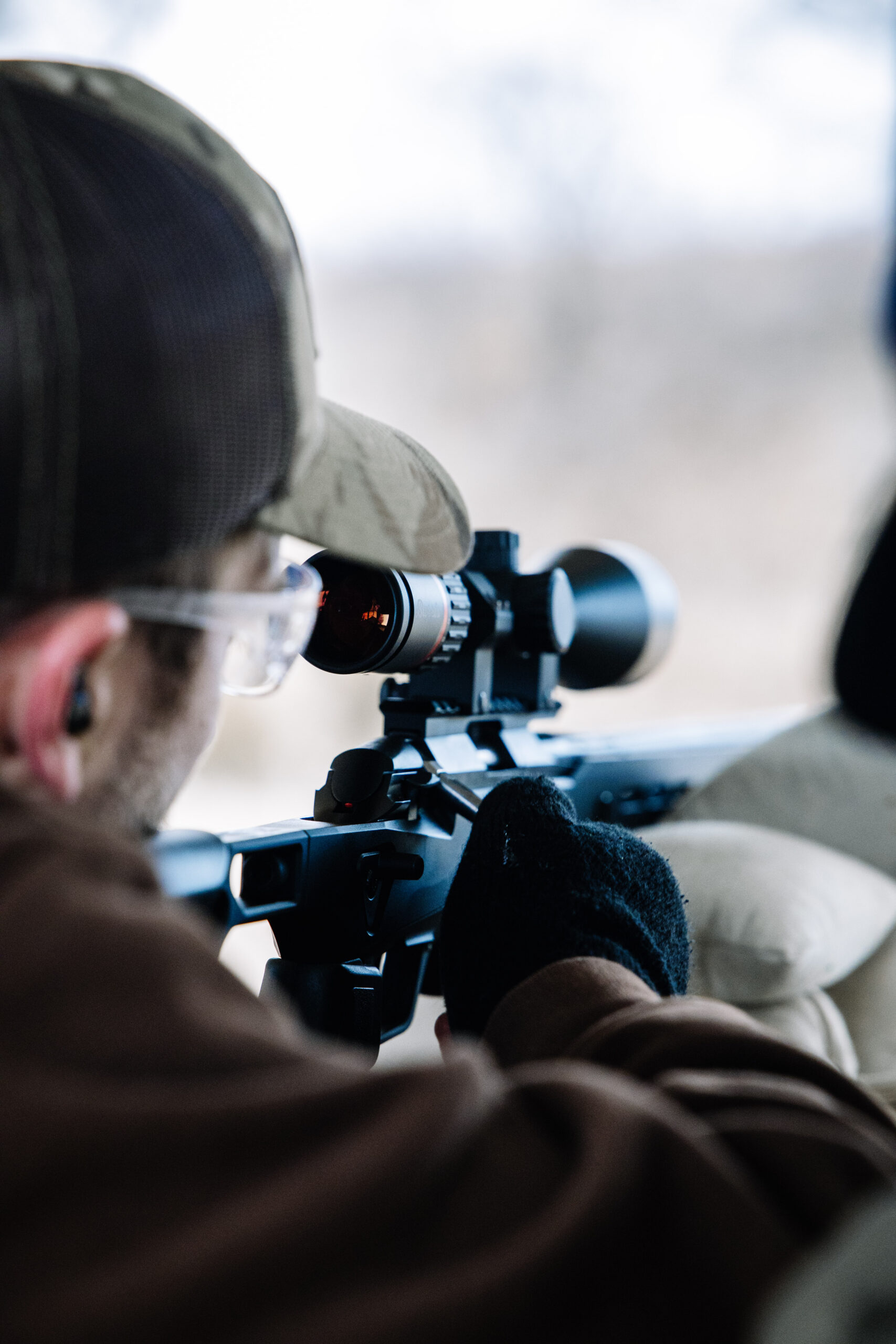
Start At 25 Yards, Confirm You're On Paper, Then Move To Your Zero Distance
02
At The Range
Zeroing — Step By Step
Start At 25 Yards — Confirm You're On Paper
Set a target at 25 yards. Fire 2–3 careful shots from a solid rest or sandbags to eliminate as much shooter variability as possible. The goal isn't a perfect group — it's confirmation that you're printing on paper. If shots are on paper and roughly centered, you're ready to move back. If they're off, make corrections at 25 yards before stepping out further. Don't burn ammo at 100 yards chasing shots that aren't even close.
Move To Your Zero Distance And Shoot A Group
Set your target at your desired zero distance — 100 yards is the most common for most centerfire hunting and target rifles. Fire a group of 3–5 shots at the center of the target, taking your time with each shot. A group tells you far more than a single shot — one shot can be a fluke, a group shows your actual average point of impact. Aim at the same point every time.
Measure The Distance From Group Center To Point Of Aim
Walk to the target or use a spotting scope. Find the center of your group — not the flier at the edge, the center of the cluster. Measure how far and in what direction the group center is from your point of aim. Write it down. You'll use this to calculate your turret adjustments precisely rather than guessing and over-correcting.
Dial The Turrets To Correct The Error
Use your scope's elevation and windage turrets to correct the point of impact to your point of aim. Each click moves impact by a specific amount — typically 1/4 MOA (~0.25") at 100 yards for most hunting and target scopes. Count your clicks, make the adjustment, and fire another group to confirm. It may take 2–3 cycles of adjustment and shooting to dial in precisely — that's completely normal and expected.
Lock In Your Zero And Reset The Turrets
Once your group center is landing on your point of aim, you're zeroed. If your scope has resettable turrets, lift or loosen the dial and align the "0" mark to the index line — this doesn't change your zero, it just gives you a reference to return to if turrets get bumped. Replace the caps if your scope has them. Your job is done.
Understanding Your Turrets
The two turrets on your scope — elevation on top, windage on the side — are your adjustment controls. Understanding which direction each one moves your point of impact is essential before you start dialing. The rule that trips most beginners is this: you're moving where the bullet goes, not where the crosshair points — but the result is the same. Dial the turret in the direction you want the shot to move.
Top Turret
Elevation — Up & Down
The elevation turret moves your point of impact vertically. If your group is printing low, dial the turret toward "Up" to raise the impact. If you're hitting high, dial "Down" to lower it. Most scopes label this clearly on the turret body with arrows or text.
At 100 yards with 1/4 MOA clicks: every 4 clicks moves your group approximately 1 inch. If your group is 2 inches low, you need 8 clicks up. Simple math — but always count the clicks and write them down so you're not guessing when the next group lands.
Side Turret
Windage — Left & Right
The windage turret moves your point of impact horizontally. If your group is hitting to the right, dial toward "Left" to push impact left. Hitting left of the bullseye? Dial toward "R" to push impacts right. Think of it as chasing the bullet holes — dial in the direction you want the group to move.
The same click math applies: 1/4 MOA clicks at 100 yards move impact roughly 1/4 inch per click. Measure the horizontal distance from group center to your point of aim, calculate your clicks, and make the correction before firing again.
Quick Click Reference — 1/4 MOA Scope At 100 Yards
1 inch correction needed
4
Clicks
2 inch correction needed
8
Clicks
3 inch correction needed
12
Clicks
4 inch correction needed
16
Clicks
6 inch correction needed
24
Clicks
Range Tips That Make A Difference
Zero in calm conditions whenever possible. A 5 mph crosswind can push a group several inches at 100 yards — making it nearly impossible to know whether your turret corrections are working or whether the wind is masking or amplifying your adjustments.
Let the barrel cool between groups, especially when shooting 5+ rounds. A hot barrel can shift point of impact by a meaningful amount — not ideal when you're trying to find your true zero. Fire a group, rest, fire another. Consistency in barrel temperature means consistency in results.
A 3-shot group is a starting point, not a conclusion. The more data you have, the better your true average point of impact. If your budget allows, shoot 20, 50, or even 100 rounds across multiple groups before declaring a final zero. Your confidence in that zero grows proportionally with the rounds on paper.
Use sandbags or a proper shooting rest for the zeroing process. Your job at this stage is to eliminate human variability so that adjustments you make are actually reflected in where the next group lands. A freehand shot during zeroing introduces shooter error that makes the data meaningless.
After your final zero, don't make one last "one more click" adjustment unless you've confirmed it with another group. Scopes don't always move exactly the amount a single click would suggest at the low end of adjustment. Confirm every change with a group before locking in.
"A Wandering Zero Isn't Usually A Scope Problem. It's Usually A Mount Problem."
If Your Scope Won't Hold Zero — Check The Mount
You zeroed carefully, came back the next session, and the zero has walked. Before you question your shooting or suspect the scope, check the mount. In the overwhelming majority of cases where a zero won't hold, the scope mount is the culprit — not the optic. A scope that's properly made and correctly mounted will hold zero indefinitely. A scope on a loose or under-torqued mount won't hold zero no matter how carefully you zero it.
Every shot produces recoil. If the scope is not locked down absolutely solidly, that recoil can allow the scope to shift ever so slightly in the rings — or the rings to shift on the base. Over a few shots, those tiny movements add up. Even a single bump during transport or storage can knock a poorly secured scope off zero without you knowing it. A quality mount, correctly torqued, eliminates all of this.
Check Torque On All Screws
Threadlocker On Base Screws
Confirm The Base Fits The Rifle
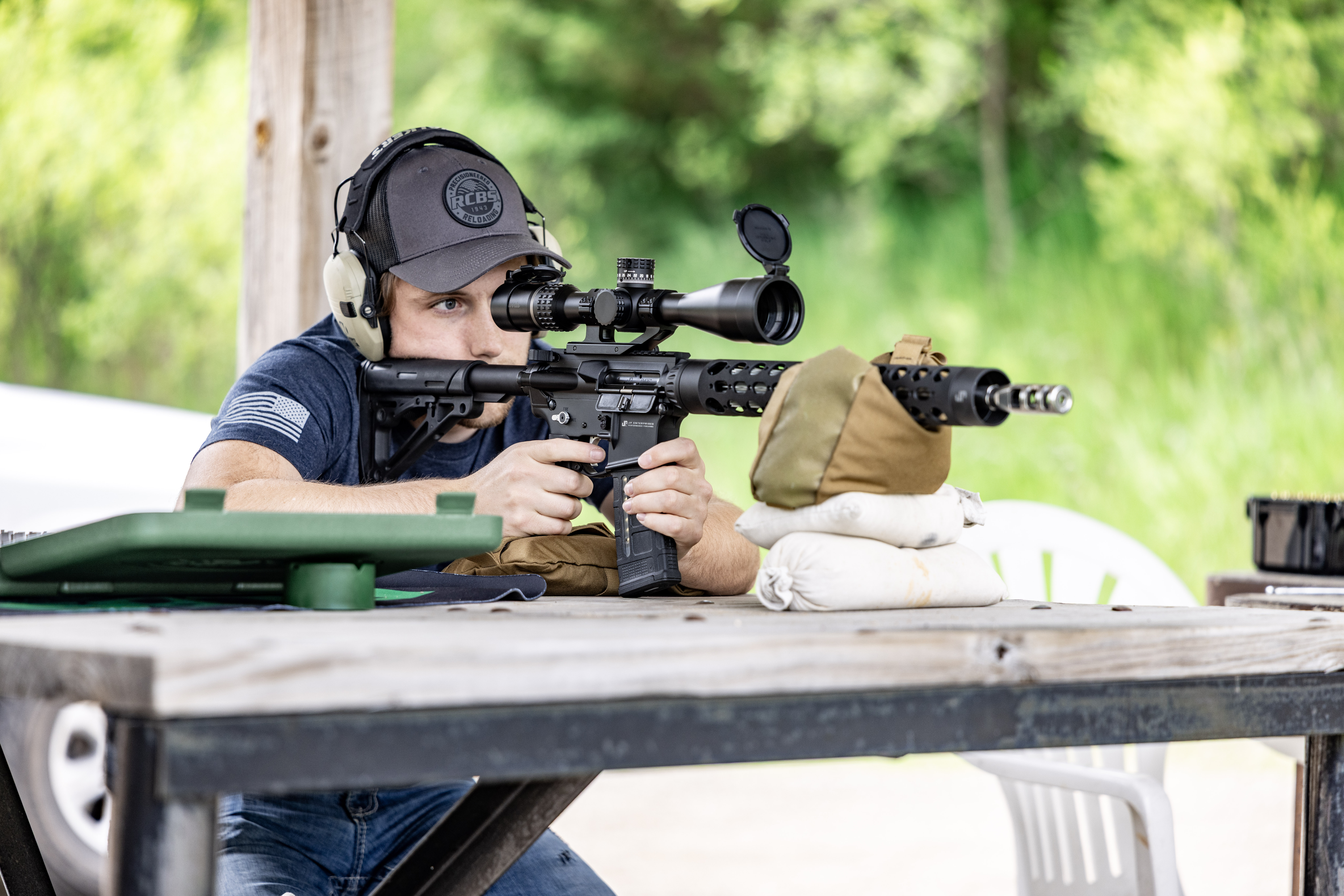
A Solid Mount Holds The Zero You Worked For — Shot After Shot
"Zero It Right Once. Then Trust It Every Time You Pull The Trigger."
Bore-sight to get on paper. Zero methodically at the range. Understand your turrets. Collect enough data to know where you truly land. And make sure your mount is doing its job before blaming anything else.
Do all of that and you'll have a setup you can trust — one where a miss means something to correct, not something to chase.