


Scoping An AR-15? Here's Why The Mount Matters As Much As The Optic.
You've decided to top your AR-15 with a scope or LPVO. Good call. But before you grab any old rings and start wrenching, there's something worth understanding: the AR-15 platform has unique mounting needs that most bolt-action setups don't. Get this right and your optic will feel like it belongs on the rifle. Get it wrong and you'll be fighting the gun every time you shoulder it.
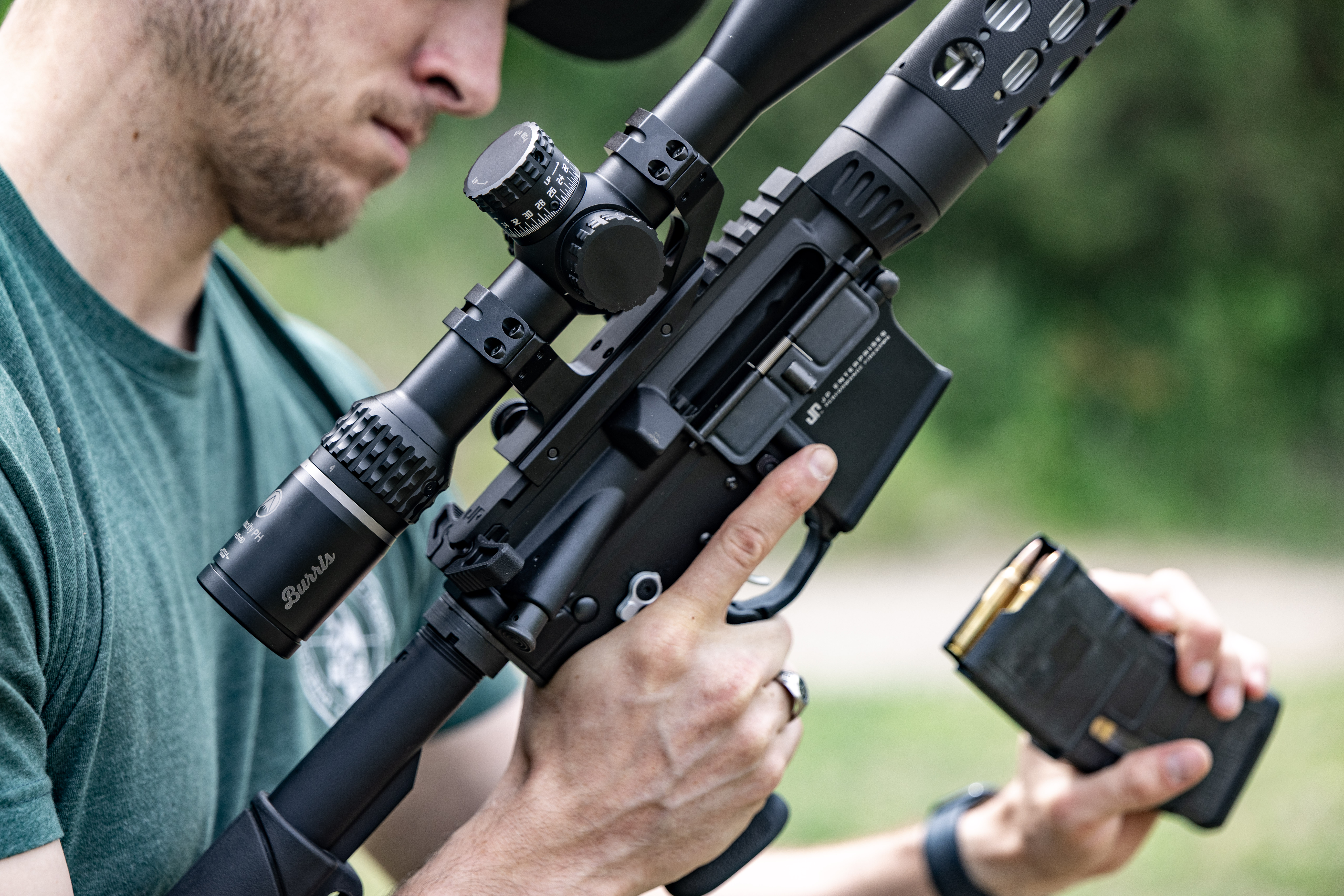
The Right Mount Transforms How An AR-15 Feels Behind The Glass
Why AR-15s Almost Always Need A Cantilever Mount
Most bolt-action rifles have long receivers and generous rail space. An AR-15 doesn't. The flat-top Picatinny rail is relatively short, and with a collapsible stock in the mix, getting your eye in the right place behind a scope can be a real challenge with standard rings.
A cantilever mount solves this by pushing the optic forward on the rail — typically 1.5 to 2 inches — so your eye relief falls right where it needs to be without having to collapse or extend the stock awkwardly. Instead of hunching into the rifle to find the eye box, the scope comes to you. Your cheek weld stays solid, your neck stays relaxed, and your shooting position stays upright and natural.
It's one of those things that sounds like a small detail until you shoot both ways back to back — and then you immediately understand why AR shooters almost universally choose cantilever over standard rings.
Why One-Piece Beats Two-Piece On An AR
On a bolt-action, two-piece rings work great. On an AR, they introduce a problem that's easy to overlook: the handguard and the upper receiver are two separate structures. On most AR builds, the handguard floats independently — it's not rigidly connected to the receiver the same way a bolt-action rail is.
If you use two separate rings and one ends up on the receiver while the other lands on a handguard rail, you're bridging two unconnected pieces of the rifle. Any flex, pressure, or movement in the handguard — pressing against a barricade, pulling a sling, or just firing — can tilt that forward ring ever so slightly. That shift changes your point of impact, and it may not be consistent shot to shot.
A one-piece cantilever mount eliminates this entirely. It clamps to the upper receiver only, the scope travels with the receiver as one unit, and nothing sneaks in to change your zero. It's a cleaner, more reliable solution for the platform.
The Case For One-Piece On An AR — At A Glance
"Mount It Once. Zero It Once. Then Trust It Every Time You Shoulder The Rifle."
Weaver's AR-15 Mount Lineup
Weaver builds several one-piece cantilever mounts specifically engineered for flat-top AR platforms. Here are the three worth knowing about.
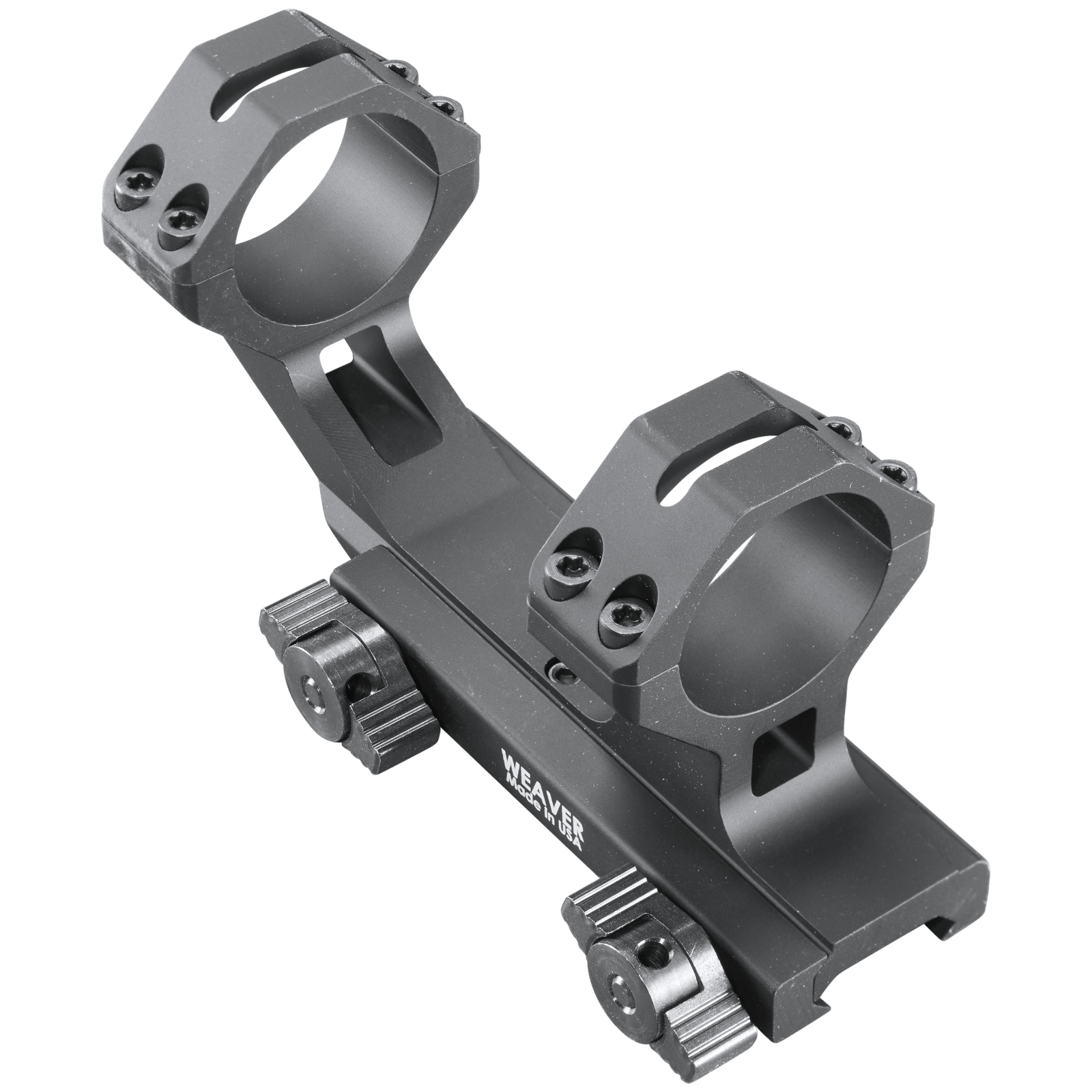
30mm Tube Scopes
SPR 30mm Tactical Mount
Purpose-built for AR-style rifles running a 30mm scope tube. Delivers the ideal cantilever offset and mount height for a flat-top Picatinny rail. Machined from aircraft-grade 6061-T6 aluminum — light enough to not slow you down, strong enough to hold zero through thousands of rounds.
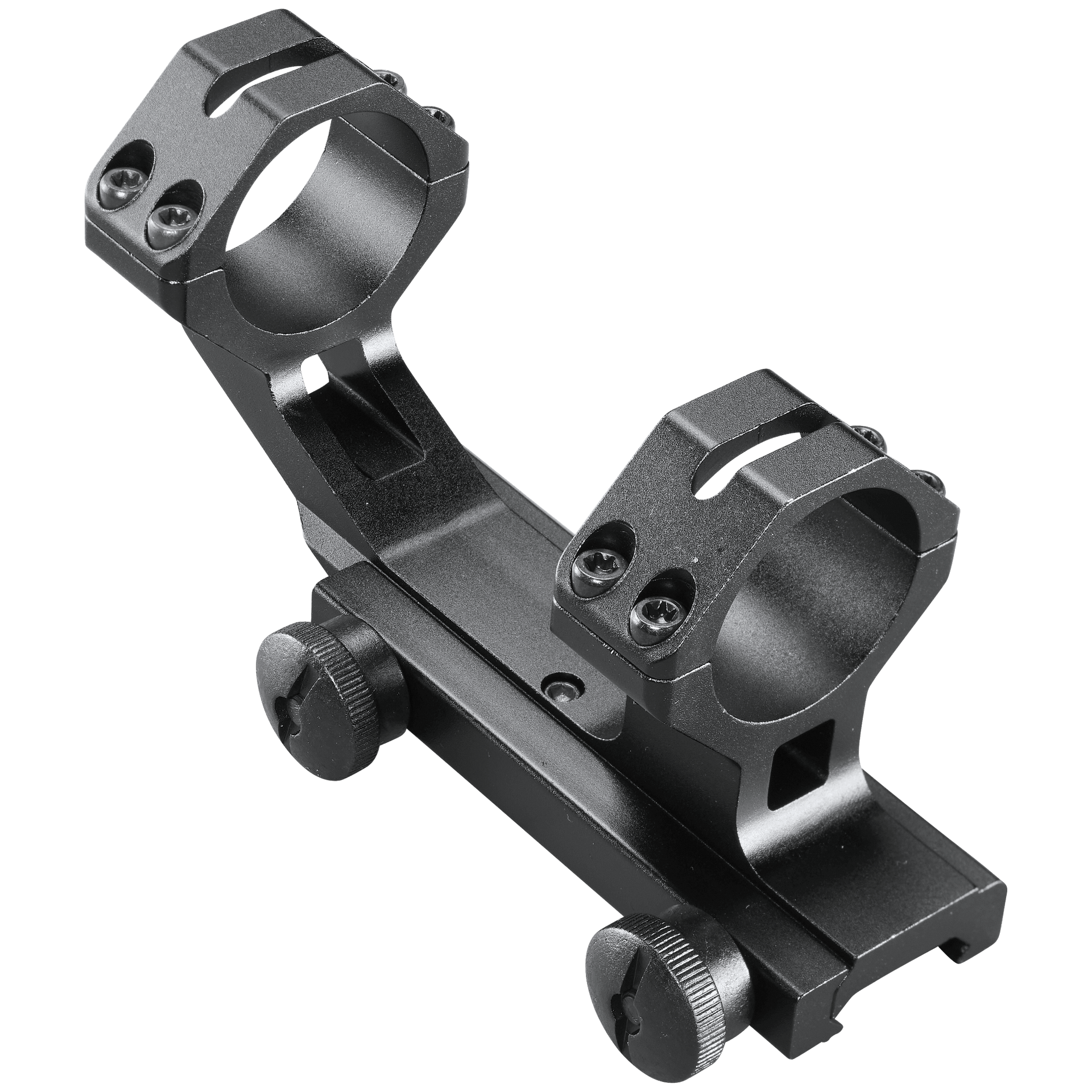
Tool-Free Tightening
Thumb-Nut SPR Mount
All the advantages of the SPR platform with a thumb-nut clamp design that lets you tighten rings by hand — no screwdrivers needed in the field. Available in 1" and 30mm. Features an integral recoil lug base that locks into the Picatinny rail for rock-solid return-to-zero. A smart choice for shooters who value speed and simplicity.
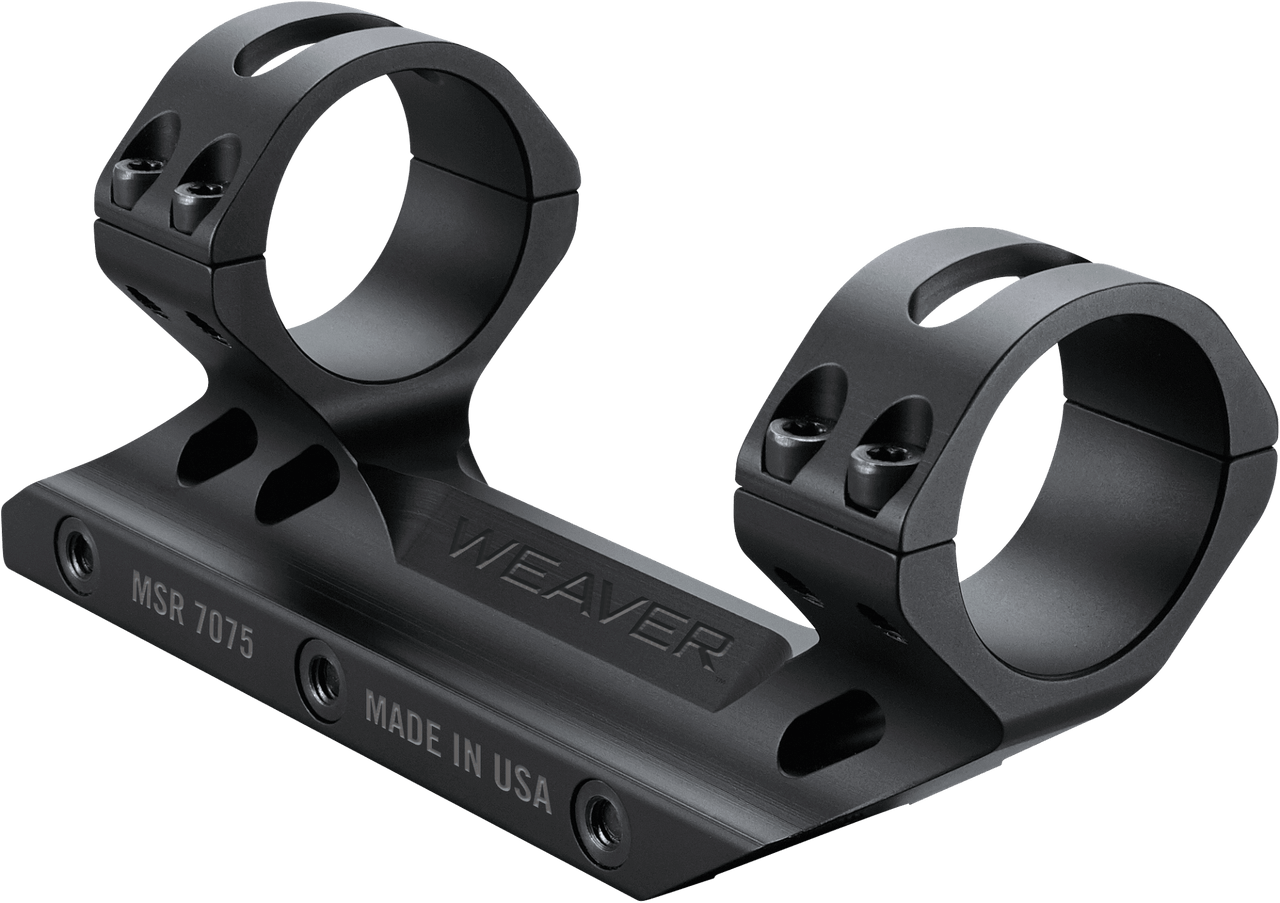
Full AR/MSR Lineup
Premium MSR Mounts & Rails
The full Weaver AR/MSR catalog — including the Premium MSR Optics Mount in 1", 30mm, and 34mm. The Premium MSR is machined from 7075-T6 aluminum (stronger and lighter than 6061), features double recoil lugs, 3,600 lbs of clamping force, and is proudly made in the USA. At around 6 oz it punches well above its weight class.
A Few Final Tips Before You Mount Up
Center the mount on the upper receiver. Before you torque anything down, make sure the mount is sitting square on the rail and centered left-to-right. It's an easy check that prevents a frustrating zero session later.
Match your tube diameter. AR mounts come in 1-inch, 30mm, and 34mm versions. Measure your scope tube before ordering — the diameter is usually printed on the scope body or in the spec sheet. A 30mm mount on a 1-inch tube (or vice versa) isn't going to work.
Torque to spec. Even on a one-piece mount, ring screws need to be torqued correctly — not just hand-tight. Under-torqued rings allow the scope to roll under recoil; over-torqued rings can crush the tube. A basic torque wrench costs less than one box of good ammo and pays for itself the first time you use it.
Zero after any mount swap. Even if you're putting the same scope back on the same rifle in a different mount, always re-zero. Assume nothing has stayed the same until the target confirms it.
"The Right Mount Means Less Time Chasing Zero And More Time Hitting Targets."
On an AR-15, the mount isn't an afterthought — it's a core part of what makes the system work. Invest in one built specifically for the platform.
Install it correctly, zero it at the range, and then trust it. That's how confident AR shooters are made.